 Site has a full slide image.
  Site has an image.
  No images for this site.
Site has a full slide image. Site has an image. No images for this site.
No images for this site.
Site has a full slide image. Site has an image. No images for this site.
Note that to see the 'Geology' layer (layer options in top right corner) you may have to zoom out.
Many fabrics have a range of abundances. The range maximum (top) and minimum (bottom) are shown.
** Has full slide image available.
| None (0) | Minor (1) | Few (2) | Common (3) | Frequent (4) | Major (5) | Very Dominant (6) |
| 0% | 0-5% | 5-15% | 15-30 % | 30-50% | 50-70% | 70-100% |
| Name | Cal. | Quartz | Feldspar | Pyroxene | Amphibole | Opaques | Olivine | Biotite | Muscovite | Epidote | Garnet/ Spinel | Ig./Met. Rocks | Sed. Rocks | Grog | Lithics/ Region |
|---|---|---|---|---|---|---|---|---|---|---|---|---|---|---|---|
| tpr110 ** | 0 | 1 | 6 | 2 | 3 | 1 | 0 | 0 | 0 | 0 | 0 | 3 | 0 | 0 | microlitic |
| Shortland feldspathic | 0 | 0 | 6 | 1 | 1 | 1 | 0 | 0 | 0 | 0 | 0 | 1 | 0 | 0 | Solomons |
| Slide | Fabric | Possible Origin | Ware | Cal. | Quartz | Feldspar | Pyroxene | Amphibole | Opaques | Olivine | Biotite | Muscovite | Epidote | Garnet/ Spinel | Ig./Met. Rocks | Sed. Rocks | Grog | Lithics |
|---|---|---|---|---|---|---|---|---|---|---|---|---|---|---|---|---|---|---|
| WD_103_9 | tpr110 (Shortland feldspathic) | Bougainville/SI | Middle Shortland (1000 - 300 BP) | 0 | 0 | 6 | 1 | 3 | 1 | 0 | 0 | 0 | 0 | 0 | 1 | 0 | 0 | microlitic |
| WD_103_1 | tpr110 (Shortland feldspathic) | Bougainville/SI | Late Shortland (300 - 0 BP) | 0 | 0 | 6 | 1 | 3 | 1 | 0 | 0 | 0 | 0 | 0 | 1 | 0 | 0 | microlitic |
| WD_103_13 | tpr110 (Shortland feldspathic) | Bougainville/SI | Early Shortland (1500 - 1000 BP) | 0 | 0 | 6 | 1 | 3 | 1 | 0 | 0 | 0 | 0 | 0 | 1 | 0 | 0 | microlitic |
| WD_103_14 | tpr110 (Shortland feldspathic) | Bougainville/SI | Early Shortland (1500 - 1000 BP) | 0 | 0 | 6 | 1 | 2 | 1 | 0 | 0 | 0 | 0 | 0 | 3 | 0 | 0 | microlitic |
| WD_103_15 | tpr110 (Shortland feldspathic) | Bougainville/SI | Middle Shortland (1000 - 300 BP) | 0 | 0 | 6 | 1 | 3 | 1 | 0 | 0 | 0 | 0 | 0 | 1 | 0 | 0 | microlitic |
| WD_103_3 | tpr110 (Shortland feldspathic) | Bougainville/SI | Late Shortland (300 - 0 BP) | 0 | 0 | 6 | 1 | 3 | 1 | 0 | 0 | 0 | 0 | 0 | 1 | 0 | 0 | microlitic |
| WD_103_4 | tpr110 (Shortland feldspathic) | Bougainville/SI | Early Shortland (1500 - 1000 BP) | 0 | 0 | 6 | 1 | 1 | 1 | 0 | 0 | 0 | 0 | 0 | 3 | 0 | 0 | microlitic |
| WD_103_7 | tpr110 (Shortland feldspathic) | Bougainville/SI | Middle Shortland (1000 - 300 BP) | 0 | 0 | 6 | 1 | 3 | 1 | 0 | 0 | 0 | 0 | 0 | 1 | 0 | 0 | microlitic |
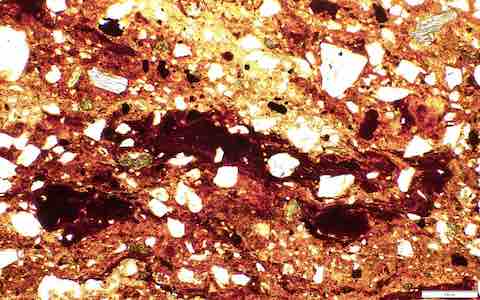
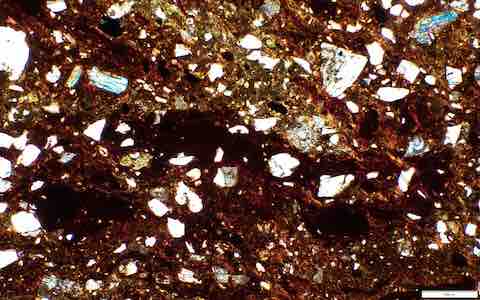
Middle Period Ware. Feldspathic sands in which plagioclase mineral grains of volcanic derivation form the predominant grain type. Distinguised from others by the green hornblende lacking brown pleochromic tints.
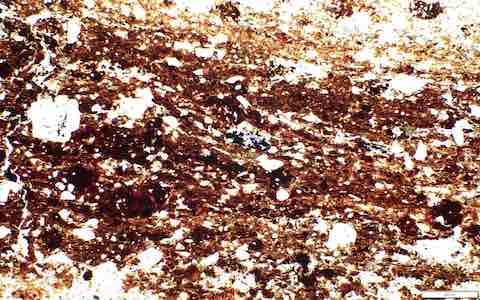
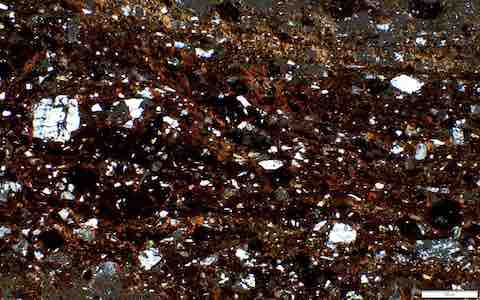
Late Period Ware. Feldspathic sands in which plagioclase mineral grains of volcanic derivation form the predominant grain type. Distinguised from others by the green hornblende lacking brown pleochromic tints.
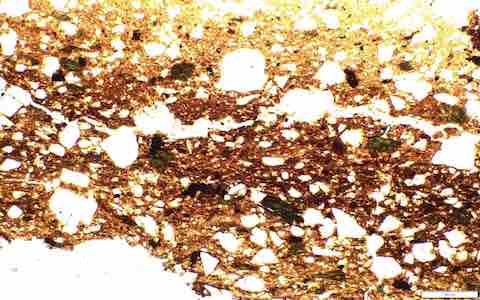
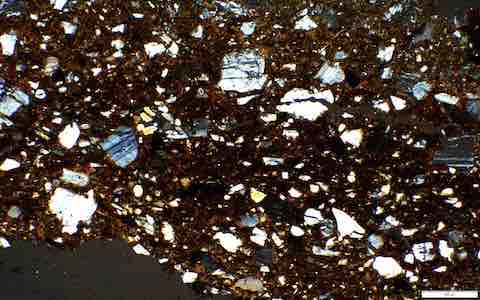
Early/Middle Transition Ware. Feldspathic sands in which plagioclase mineral grains of volcanic derivation form the predominant grain type. Distinguised from others by the green hornblende lacking brown pleochromic tints.
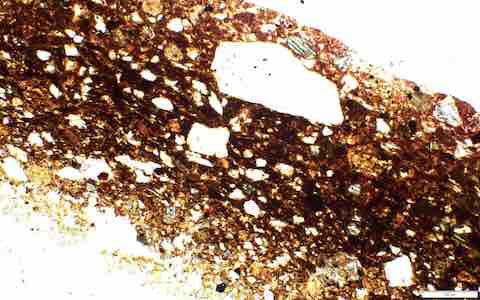
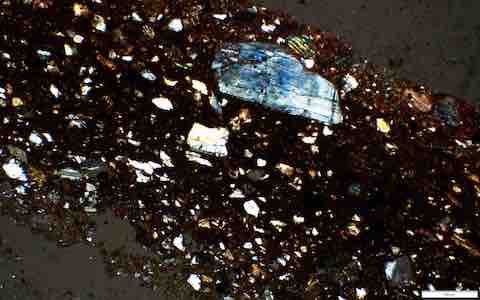
Early Period Ware. Feldspathic sands in which plagioclase mineral grains of volcanic derivation form the predominant grain type. Distinguised from others by the green hornblende lacking brown pleochromic tints.
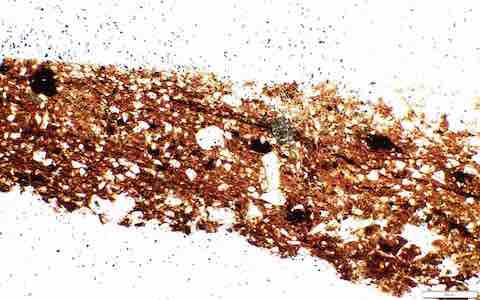
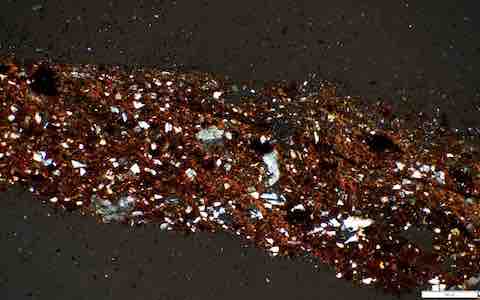
Early/Middle Transition Ware. Feldspathic sands in which plagioclase mineral grains of volcanic derivation form the predominant grain type. Distinguised from others by the green hornblende lacking brown pleochromic tints.
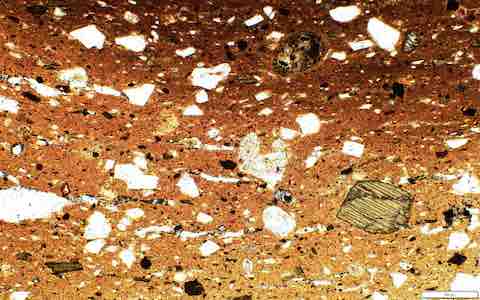
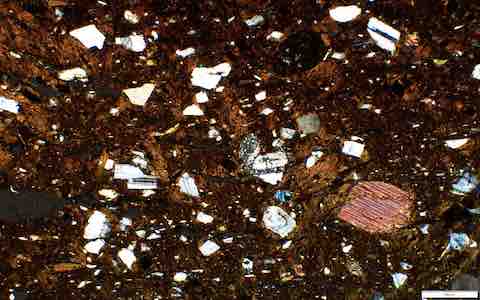
Late Period Ware. Feldspathic sands in which plagioclase mineral grains of volcanic derivation form the predominant grain type. Distinguised from others by the green hornblende lacking brown pleochromic tints.
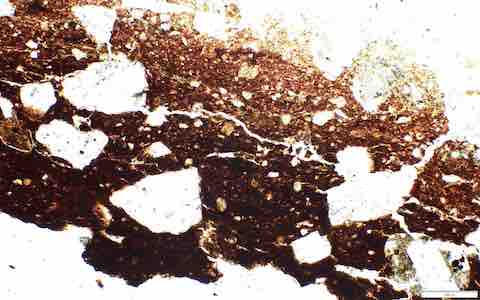
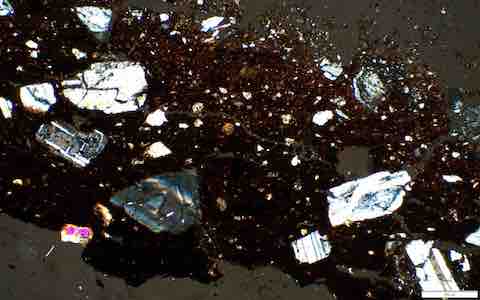
Early Period Ware. Feldspathic sands in which plagioclase mineral grains of volcanic derivation form the predominant grain type. Distinguised from others by the green hornblende lacking brown pleochromic tints.
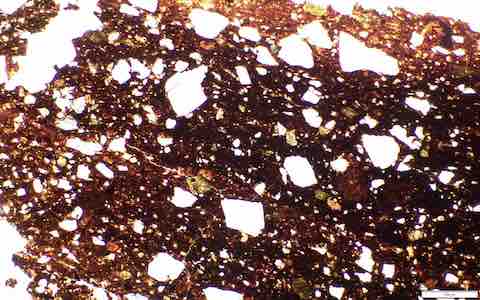
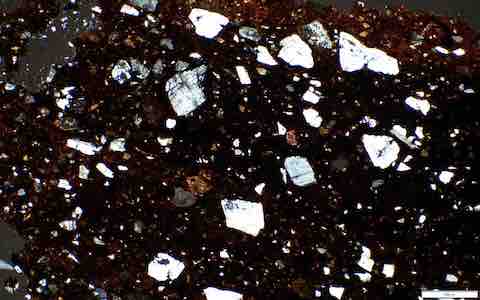
Middle Period Ware. Feldspathic sands in which plagioclase mineral grains of volcanic derivation form the predominant grain type. Distinguised from others by the green hornblende lacking brown pleochromic tints.