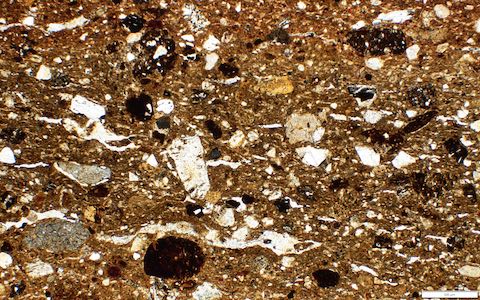
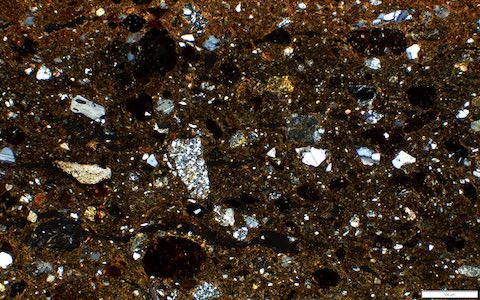
| None (0) | Minor (1) | Few (2) | Common (3) | Frequent (4) | Major (5) | Very Dominant (6) |
| 0% | 0-5% | 5-15% | 15-30 % | 30-50% | 50-70% | 70-100% |
| Name | Cal. | Quartz | Feldspar | Pyroxene | Amphibole | Opaques | Olivine | Biotite | Muscovite | Epidote | Garnet/ Spinel | Ig./Met. Rocks | Sed. Rocks | Grog | Lithics/ Region |
|---|---|---|---|---|---|---|---|---|---|---|---|---|---|---|---|
| tpr459 | 2 | 2 | 3 | 4 | 0 | 3 | 0 | 0 | 0 | 0 | 0 | 4 | 0 | 0 | microphaneritic, microlitic, vitric |
| Madang pyroxenic lithic | 0 | 0 | 2 | 3 | 0 | 2 | 0 | 0 | 0 | 0 | 0 | 3 | 0 | 0 | PNG |
| tpr460 | 0 | 2 | 5 | 2 | 0 | 1 | 0 | 0 | 0 | 0 | 0 | 4 | 0 | 0 | microlitic, microphaneritic |
| Madang feldspathic lithic | 0 | 0 | 4 | 1 | 0 | 1 | 0 | 0 | 0 | 0 | 0 | 3 | 0 | 0 | PNG |
| Slide | Fabric | Possible Origin | Ware | Cal. | Quartz | Feldspar | Pyroxene | Amphibole | Opaques | Olivine | Biotite | Muscovite | Epidote | Garnet/ Spinel | Ig./Met. Rocks | Sed. Rocks | Grog | Lithics |
|---|---|---|---|---|---|---|---|---|---|---|---|---|---|---|---|---|---|---|
| IL_1_39 | tpr461 (Madang feldspathic hybrid) | Madang | Non-coiled - Madang (1000 - 0 BP) | 4 | 0 | 2 | 0 | 0 | 1 | 0 | 0 | 0 | 0 | 0 | 2 | 0 | 0 | microlitic, microphaneritic |
| IL_1_55 | tpr484 (Huon quartzose) | Madang | Non-coiled - Madang (1000 - 0 BP) | 0 | 4 | 4 | 1 | 0 | 3 | 0 | 0 | 0 | 0 | 0 | 1 | 0 | 0 | plutonite |
| IL_1_37 | tpr485 (Madang placer) | Madang | Non-coiled - Madang (1000 - 0 BP) | 0 | 1 | 2 | 3 | 0 | 5 | 0 | 0 | 0 | 0 | 0 | 1 | 0 | 0 | na |
| IL_1_21 | tpr458 (Huon calcareous) | Madang | Non-coiled - Madang (1000 - 0 BP) | 5 | 2 | 2 | 0 | 0 | 1 | 0 | 0 | 0 | 0 | 0 | 0 | 0 | 0 | na |
| IL_2_16 | tpr459 (Madang pyroxenic lithic) | Madang | bodi (Bilibil) (500 - 0 BP) | 2 | 0 | 3 | 4 | 0 | 2 | 0 | 0 | 0 | 0 | 0 | 4 | 0 | 0 | microphaneritic, microlitic |
| IL_1_1 | tpr459 (Madang pyroxenic lithic) | Madang | bodi (Bilibil) (500 - 0 BP) | 2 | 0 | 3 | 3 | 0 | 3 | 0 | 0 | 0 | 0 | 0 | 3 | 0 | 0 | microphaneritic |
| IL_1_38 | tpr459 (Madang pyroxenic lithic) | Madang | bodi (Bilibil) (500 - 0 BP) | 0 | 1 | 3 | 3 | 0 | 2 | 0 | 0 | 0 | 0 | 0 | 3 | 0 | 0 | microphaneritic |
| IL_2_35 | tpr459 (Madang pyroxenic lithic) | Madang | bodi (Bilibil) (500 - 0 BP) | 0 | 0 | 2 | 4 | 0 | 2 | 0 | 0 | 0 | 0 | 0 | 4 | 0 | 0 | microphaneritic, microlitic, vitric |
| IL_2_15 | tpr459 (Madang pyroxenic lithic) | Madang | bodi (Bilibil) (500 - 0 BP) | 0 | 0 | 3 | 4 | 0 | 2 | 0 | 0 | 0 | 0 | 0 | 4 | 0 | 0 | microphaneritic |
| IL_2_56 | tpr460 (Madang feldspathic lithic) | Madang | bodi (Bilibil) (500 - 0 BP) | 0 | 1 | 5 | 1 | 0 | 1 | 0 | 0 | 0 | 0 | 0 | 4 | 0 | 0 | microlitic, microphaneritic |
| IL_2_55 | tpr460 (Madang feldspathic lithic) | Madang | bodi (Bilibil) (500 - 0 BP) | 0 | 0 | 4 | 2 | 0 | 1 | 0 | 0 | 0 | 0 | 0 | 3 | 0 | 0 | microphaneritic, microlitic |
| IL_2_36 | tpr460 (Madang feldspathic lithic) | Madang | bodi (Bilibil) (500 - 0 BP) | 0 | 2 | 4 | 1 | 0 | 1 | 0 | 0 | 0 | 0 | 0 | 4 | 0 | 0 | microphaneritic, microlitic |
| IL_1_20 | tpr460 (Madang feldspathic lithic) | Madang | bodi (Bilibil) (500 - 0 BP) | 0 | 2 | 4 | 1 | 0 | 1 | 0 | 0 | 0 | 0 | 0 | 4 | 0 | 0 | microphaneritic, microlitic, lathwork |
| IL_1_6 | tpr460 (Madang feldspathic lithic) | Madang | bodi (Bilibil) (500 - 0 BP) | 0 | 1 | 4 | 2 | 0 | 1 | 0 | 0 | 0 | 0 | 0 | 4 | 0 | 0 | microphaneritic, microlitic, lathwork |
Madang style sherd. CAUTION: Section less than 30microns. Plagioclase (5%), volcanic rock fragments (<5%), ferruginized pellets and accessory shell fragments are all less than 0.6 m in diameter. The clay is red brown and contains abundant fine grained quartz, feldspar and iron oxides.


Madang style. Paddle impressed. CAUTION: Section less than 30microns. Quartz and feldspar grains, ranging in size from less than 0.1mm up to 1mm. Trace pyroxene and opaques.
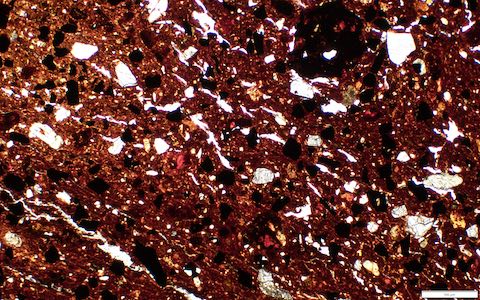
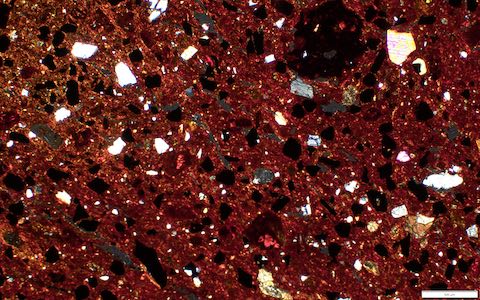
Madang style. CAUTION: Section less than 30microns. This sherd is characterized by angular to subrounded magnetite grains (5%) less than 0.2 mm in length. Pyroxene grains (1%) are less than 0.2 mm in length. Plagioclase grains (<1%) are generally less than 0.2 mm in length. But there are rare grains of quartz and feldspar up to 1 mm across. There are also trace amounts of red ferruginized grains and rare shell in the red clay.
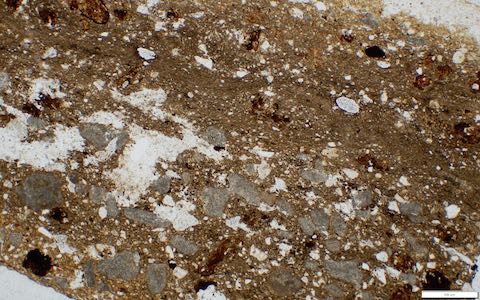
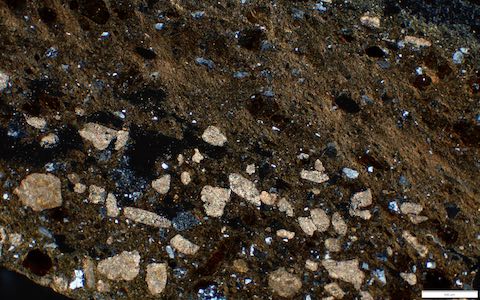
Madang style. CAUTION: Section less than 30microns. Subrounded shelly fragments up to 0.3 mm in diameter make up less than 10%. Quartz, chert and feldspar grains (<10%) are all less than 0.2 mm in length. There are some dark red-black ferruginized clasts up to 0.5 mm and the clay is brown.
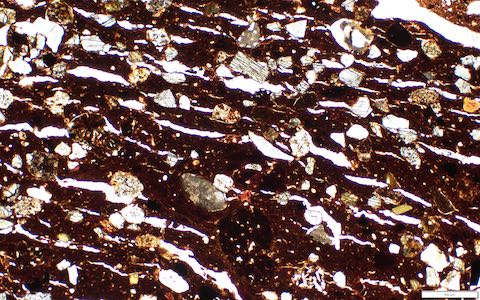
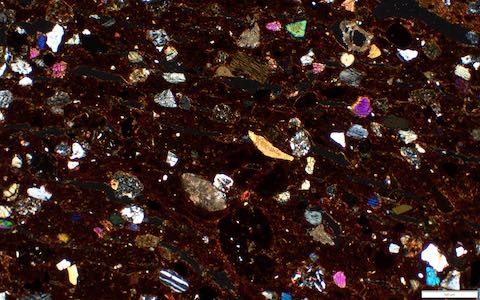
Madang style sherd. "CAUTION: Section less than 30microns. Pyroxene grains (<5%) are sub angular to sub rounded and up to 0.3 mm in length. Plagioclase grains, (<5%) are less than 0.2 mm in length. Sub rounded shelly fragments make up less than 2%. There is accessory volcanic rock fragments, red clay clasts and iron oxides.
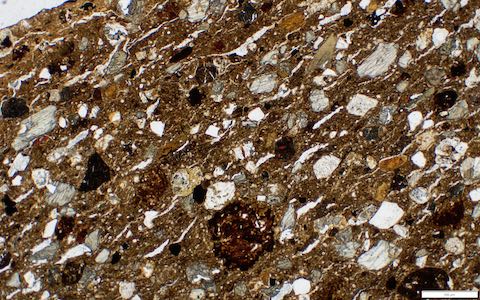
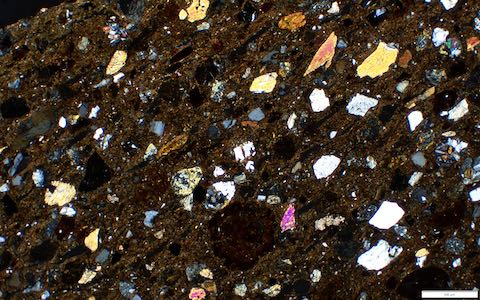
Madang style sherd. "CAUTION: Section less than 30microns. This sherd contains a mixture of shelly fragments, pyroxene, plagioclase , iron oxide and volcanic rock fragments. All these components are present in roughly the same amounts. The grain size rarely exceeds 0.3 mm in length. There are some large clasts made up of ferruginized clay and feldspar. These could be weathered volcanic rock fragments or previous pot fragments. The clay is dark brown.
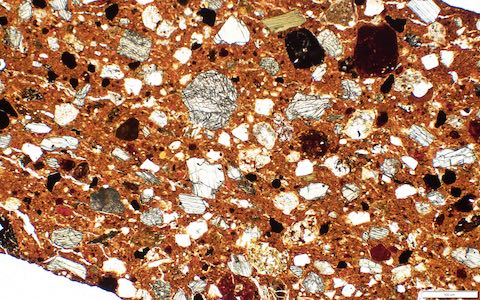
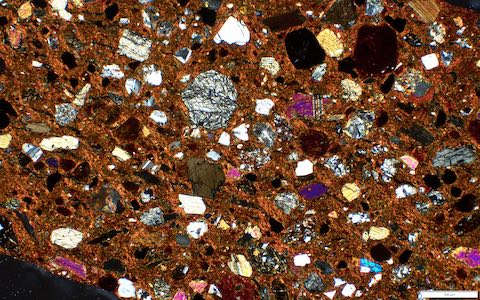
Madang style sherd. CAUTION: Section less than 30microns. Pyroxene and plagioclase grains are up to 0.3 mm in length. Magnetite grains are subrounded and elongate and less than 0.2 mm. Volcanic rock fragments are less than 0.2 mm in length. There are some minor quartzitic grains and red ferruginized grains. The clay is red brown and contains a small percentage of quartz and feldspar.
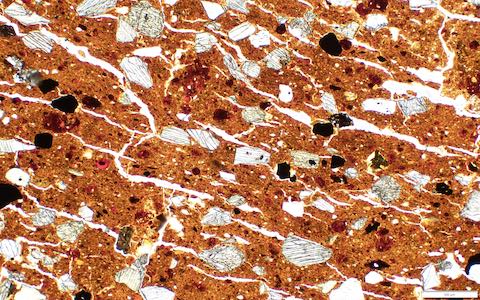
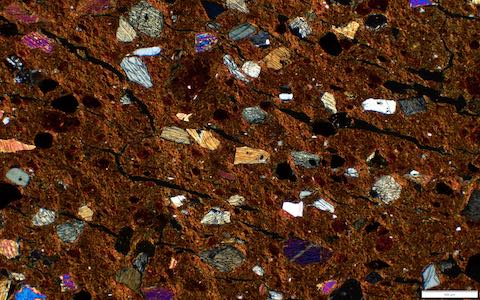
Madang style sherd. CAUTION: Section less than 30microns. Pyroxene crystals are about 0.3 mm in length. Plagioclase crystals are about 0.1 mm in length. Volcanic rock fragments are hypohyaline in texture and consist of plagioclase laths and altered glass. The are some yellow brown rounded clay clasts, red clay clasts, subrounded iron oxides are about 0.2 mm in length. The clay is brown and contains fine quartz and ferruginized opaques.
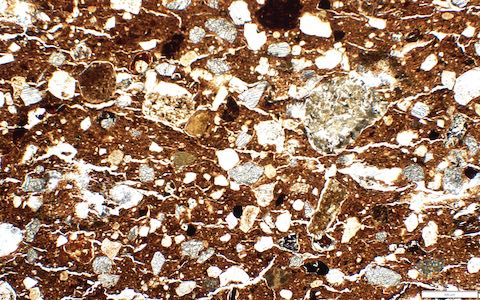
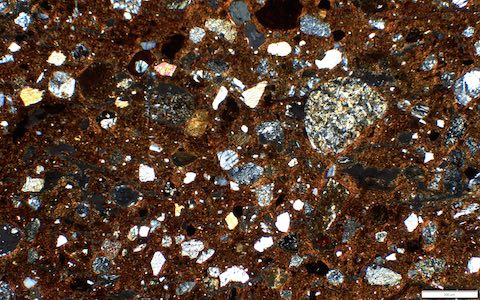
Madang style sherd. CAUTION: Section less than 30microns. Does not contain carbonate shell fragments and there are some large porphyritic dacite rock fragments. Volcanic rock fragments are also more abundant.
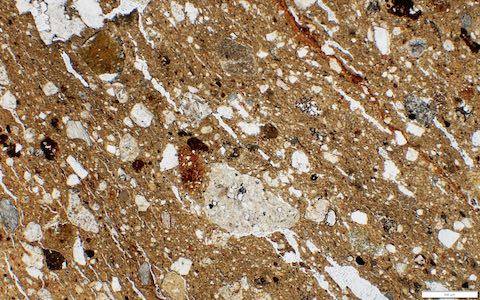
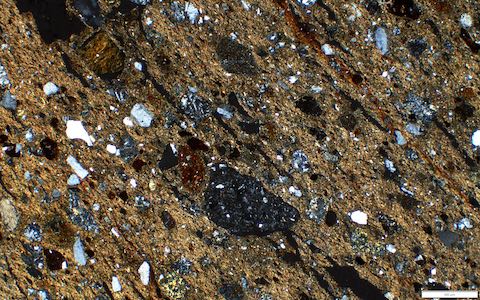
Madang style sherd. CAUTION: Section less than 30microns. Angular and subrounded feldspar grains, are generally 0.2 mm in diameter. Rock fragments are both volcanic and quartzitic. Volcanic rock fragments, up to 0.3 mm in length, generally contain plagioclase, opaques and minor pyroxene. A few grains consist of abundant iron oxide, altered glass and minor plagioclase. The quartz rock fragments are subrounded, about 0.2 mm across and are composed of small quartz mosaics.
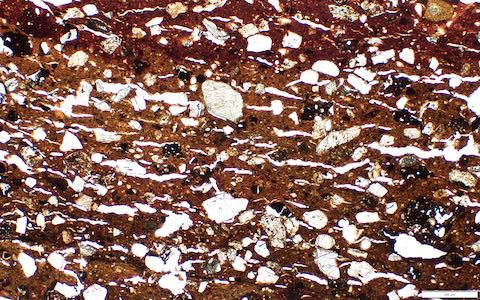
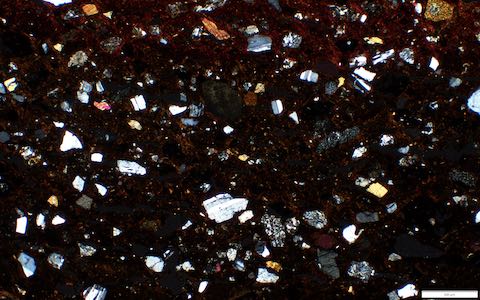
Madang style sherd. CAUTION: Section less than 30microns. Angular to subrounded plagioclase crystals are the main mineral component. Pyroxene grains up to 0.3 m in length. Altered rock fragments generally contain plagioclase microlites and glass. Ferruginized clay clasts up to 1 mm in length are rare. Red iron oxide pellets and black magnetite present.
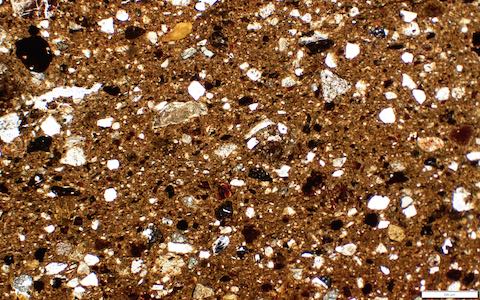
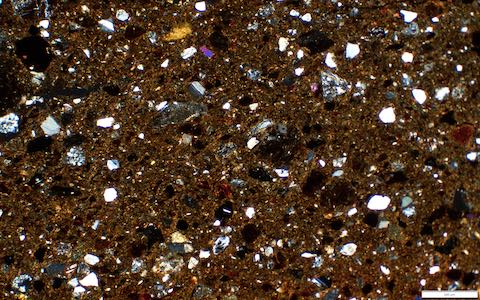
Madang style. CAUTION: Section less than 30microns. Angular quartz and feldspar grains (about 10%), Minor pyroxene grains are all <0.2 mm in length. There are some minor volcanic rock fragments which contain plagioclase, iron oxides and altered glass. Opaque minerals range in size from 0.1 to 0.5 mm in length, and there is less than 5% of those. The clay is red brown.
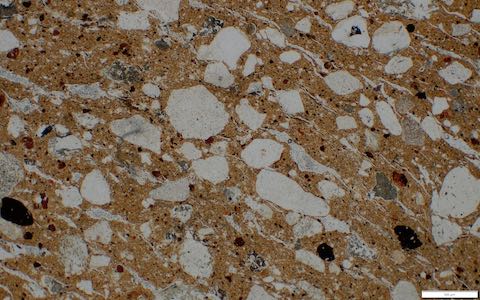
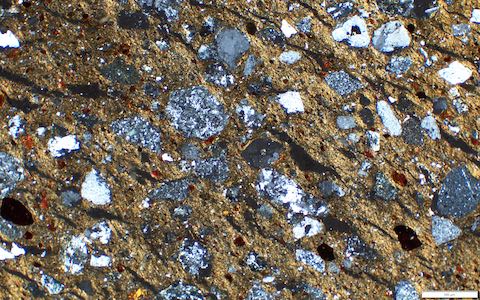
Madang style. CAUTION: Section less than 30microns. Angular feldspar and chert grains make up less than 10% of the sherd and are up to 0.4 mm in length. Volcanic rock fragments are found in two forms, one form consists of long thin plagioclase laths and skeletal iron oxides set in altered glass. The other form contains eutectic intergrowths of quartz and feldspar. The sherd also contains red ferruginized c lasts, iron oxides and minor pyroxene. The clay is red brown.
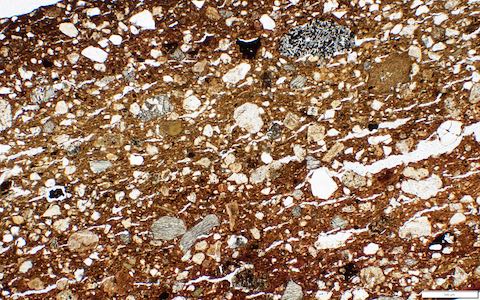
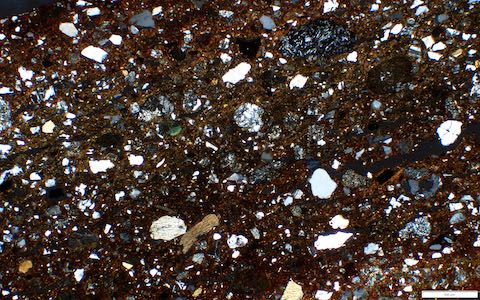
Madang style. CAUTION: Section less than 30microns. Quartz and plagioclase (about 10%) are less than 0.3 mm in length. There are some large volcanic rock fragments which contain plagioclase and pyroxene laths with minor iron oxide and also volcanic rock fragments which contain potash feldspar, plagioclase and quartz. Pyroxene grains are minor components and are up to 0.4 mm in length. There are also ferruginized clasts and iron oxides. The clay is red brown.