 Site has a full slide image.
  Site has an image.
  No images for this site.
Umboi: Basalt / Picro-Basalt, Composite type, Complex.
Site has a full slide image. Site has an image. No images for this site.
Note that to see the 'Geology' layer (layer options in top right corner) you may have to zoom out.
Many fabrics have a range of abundances. The range maximum (top) and minimum (bottom) are shown.
** Has full slide image available.
| None (0) | Minor (1) | Few (2) | Common (3) | Frequent (4) | Major (5) | Very Dominant (6) |
| 0% | 0-5% | 5-15% | 15-30 % | 30-50% | 50-70% | 70-100% |
| Name | Cal. | Quartz | Feldspar | Pyroxene | Amphibole | Opaques | Olivine | Biotite | Muscovite | Epidote | Garnet/ Spinel | Ig./Met. Rocks | Sed. Rocks | Grog | Lithics/ Region |
|---|---|---|---|---|---|---|---|---|---|---|---|---|---|---|---|
| tpr274 ** | 1 | 1 | 3 | 6 | 1 | 2 | 0 | 0 | 0 | 0 | 0 | 3 | 0 | 0 | vitric, microlitic, lathwork |
| Huon pyroxenic | 0 | 0 | 1 | 5 | 0 | 0 | 0 | 0 | 0 | 0 | 0 | 1 | 0 | 0 | PNG |
| tpr462 ** | 4 | 0 | 2 | 0 | 0 | 1 | 0 | 0 | 0 | 0 | 0 | 4 | 0 | 0 | lathwork, microlitic |
| Exotic Tuam lithic | 4 | 0 | 2 | 0 | 0 | 1 | 0 | 0 | 0 | 0 | 0 | 4 | 0 | 0 | PNG |
| tpr480 | 4 | 0 | 4 | 3 | 0 | 2 | 0 | 0 | 0 | 0 | 0 | 3 | 0 | 0 | lathwork, microlitic |
| Exotic Tuam pyroxenic hybrid | 3 | 0 | 3 | 3 | 0 | 2 | 0 | 0 | 0 | 0 | 0 | 2 | 0 | 0 | PNG |
| tpr481 ** | 0 | 0 | 2 | 3 | 0 | 3 | 0 | 0 | 0 | 0 | 0 | 4 | 0 | 0 | microlitic, microphaneritic, lathwork |
| Exotic Tuam pyroxenic | 0 | 0 | 2 | 3 | 0 | 3 | 0 | 0 | 0 | 0 | 0 | 4 | 0 | 0 | PNG |
| tpr482 ** | 0 | 2 | 4 | 1 | 5 | 3 | 0 | 0 | 0 | 0 | 1 | 3 | 0 | 0 | microphaneritic |
| Exotic Tuam amphibolic | 0 | 0 | 4 | 0 | 2 | 2 | 0 | 0 | 0 | 0 | 0 | 1 | 0 | 0 | PNG |
| tpr483 ** | 0 | 1 | 5 | 4 | 0 | 1 | 0 | 2 | 0 | 0 | 0 | 4 | 0 | 0 | microlitic, lathwork, microphaneritic, plutonite |
| Huon feldspathic lithic | 0 | 0 | 4 | 1 | 0 | 1 | 0 | 1 | 0 | 0 | 0 | 2 | 0 | 0 | PNG |
| tpr179a | 1 | 0 | 1 | 1 | 0 | 2 | 0 | 0 | 0 | 0 | 0 | 0 | 0 | 6 | microlitic |
| Huon grog | 0 | 0 | 0 | 0 | 0 | 0 | 0 | 0 | 0 | 0 | 0 | 0 | 0 | 6 | PNG |
| tpr300 | 0 | 0 | 1 | 1 | 0 | 6 | 0 | 0 | 0 | 0 | 0 | 1 | 0 | 1 | microlitic |
| Huon ferruginous | 0 | 0 | 0 | 0 | 0 | 6 | 0 | 0 | 0 | 0 | 0 | 0 | 0 | 0 | PNG |
| tpr458 | 6 | 2 | 2 | 2 | 0 | 1 | 0 | 0 | 0 | 0 | 0 | 0 | 0 | 0 | na |
| Huon calcareous | 5 | 0 | 1 | 0 | 0 | 1 | 0 | 0 | 0 | 0 | 0 | 0 | 0 | 0 | PNG |
| tpr459 ** | 2 | 2 | 3 | 4 | 0 | 3 | 0 | 0 | 0 | 0 | 0 | 4 | 0 | 0 | microphaneritic, microlitic, vitric |
| Madang pyroxenic lithic | 0 | 0 | 2 | 3 | 0 | 2 | 0 | 0 | 0 | 0 | 0 | 3 | 0 | 0 | PNG |
| tpr460 ** | 0 | 2 | 5 | 2 | 0 | 1 | 0 | 0 | 0 | 0 | 0 | 4 | 0 | 0 | microlitic, microphaneritic |
| Madang feldspathic lithic | 0 | 0 | 4 | 1 | 0 | 1 | 0 | 0 | 0 | 0 | 0 | 3 | 0 | 0 | PNG |
| Slide | Fabric | Possible Origin | Ware | Cal. | Quartz | Feldspar | Pyroxene | Amphibole | Opaques | Olivine | Biotite | Muscovite | Epidote | Garnet/ Spinel | Ig./Met. Rocks | Sed. Rocks | Grog | Lithics |
|---|---|---|---|---|---|---|---|---|---|---|---|---|---|---|---|---|---|---|
| IL_1_100 | tprx (temporary holding fabric) | Tuam | 0 | 0 | 0 | 0 | 0 | 6 | 0 | 0 | 0 | 0 | 0 | 0 | 0 | 0 | na | |
| IL_2_5 | tpr462 (Exotic Tuam lithic) | ? | Lapita (3500 - 2300 BP) | 4 | 0 | 2 | 0 | 0 | 1 | 0 | 0 | 0 | 0 | 0 | 4 | 0 | 0 | lathwork, microlitic |
| IL_2_1 | tpr274 (Huon pyroxenic) | Huon | Ancestral Sio (1700 - 500 BP) | 0 | 0 | 2 | 6 | 0 | 2 | 0 | 0 | 0 | 0 | 0 | 2 | 0 | 0 | vitric, microlitic |
| IL_2_8 | tpr480 (Exotic Tuam pyroxenic hybrid) | ? | Lapita (3500 - 2300 BP) | 3 | 0 | 3 | 3 | 0 | 2 | 0 | 0 | 0 | 0 | 0 | 2 | 0 | 0 | lathwork, microlitic |
| IL_2_7 | tpr480 (Exotic Tuam pyroxenic hybrid) | ? | Lapita (3500 - 2300 BP) | 4 | 0 | 4 | 3 | 0 | 2 | 0 | 0 | 0 | 0 | 0 | 3 | 0 | 0 | lathwork, microlitic |
| IL_2_6 | tpr481 (Exotic Tuam pyroxenic) | ? | Lapita (3500 - 2300 BP) | 0 | 0 | 2 | 3 | 0 | 3 | 0 | 0 | 0 | 0 | 0 | 4 | 0 | 0 | lathwork, microlitic |
| IL_2_4 | tpr482 (Exotic Tuam amphibolic) | ? | Type Y (1700 - 500 BP) | 0 | 0 | 4 | 0 | 5 | 2 | 0 | 0 | 0 | 0 | 0 | 3 | 0 | 0 | microphaneritic |
| IL_2_3 | tpr482 (Exotic Tuam amphibolic) | ? | Type Y (1700 - 500 BP) | 0 | 2 | 4 | 1 | 2 | 3 | 0 | 0 | 0 | 0 | 1 | 2 | 0 | 0 | microphaneritic |
| IL_2_2 | tpr483 (Huon feldspathic lithic) | Huon | Ancestral Sio (1700 - 500 BP) | 0 | 0 | 5 | 1 | 0 | 1 | 0 | 2 | 0 | 0 | 0 | 4 | 0 | 0 | microlitic, plutonite, microphaneritic |
| IL_2_59 | tpr274 (Huon pyroxenic) | Huon | Sio ware (600 - 0 BP) | 1 | 0 | 3 | 5 | 0 | 1 | 0 | 0 | 0 | 0 | 0 | 2 | 0 | 0 | vitric, microlitic |
| IL_2_16 | tpr459 (Madang pyroxenic lithic) | Madang | bodi (Bilibil) (500 - 0 BP) | 2 | 0 | 3 | 4 | 0 | 2 | 0 | 0 | 0 | 0 | 0 | 4 | 0 | 0 | microphaneritic, microlitic |
| IL_2_45 | tpr274 (Huon pyroxenic) | Huon | Sio ware (600 - 0 BP) | 1 | 0 | 2 | 5 | 0 | 1 | 0 | 0 | 0 | 0 | 0 | 2 | 0 | 0 | microlitic, vitric |
| IL_2_33 | tpr274 (Huon pyroxenic) | Huon | Sio ware (600 - 0 BP) | 0 | 0 | 2 | 6 | 0 | 1 | 0 | 0 | 0 | 0 | 0 | 1 | 0 | 0 | vitric |
| IL_2_67 | tpr274 (Huon pyroxenic) | Huon | Sio ware (600 - 0 BP) | 0 | 0 | 2 | 5 | 0 | 2 | 0 | 0 | 0 | 0 | 0 | 2 | 0 | 0 | vitric, microlitic |
| IL_2_57 | tpr274 (Huon pyroxenic) | Huon | Sio ware (600 - 0 BP) | 0 | 0 | 2 | 6 | 0 | 2 | 0 | 0 | 0 | 0 | 0 | 2 | 0 | 0 | vitric |
| IL_2_65 | tpr274 (Huon pyroxenic) | Huon | Sio ware (600 - 0 BP) | 0 | 0 | 1 | 6 | 0 | 1 | 0 | 0 | 0 | 0 | 0 | 1 | 0 | 0 | vitric |
| IL_2_60 | tpr274 (Huon pyroxenic) | Huon | Sio ware (600 - 0 BP) | 0 | 0 | 1 | 6 | 0 | 2 | 0 | 0 | 0 | 0 | 0 | 1 | 0 | 0 | vitric |
| IL_2_29 | tpr274 (Huon pyroxenic) | Huon | Sio ware (600 - 0 BP) | 0 | 0 | 2 | 6 | 0 | 2 | 0 | 0 | 0 | 0 | 0 | 2 | 0 | 0 | vitric, microlitic |
| IL_2_35 | tpr459 (Madang pyroxenic lithic) | Madang | bodi (Bilibil) (500 - 0 BP) | 0 | 0 | 2 | 4 | 0 | 2 | 0 | 0 | 0 | 0 | 0 | 4 | 0 | 0 | microphaneritic, microlitic, vitric |
| IL_2_15 | tpr459 (Madang pyroxenic lithic) | Madang | bodi (Bilibil) (500 - 0 BP) | 0 | 0 | 3 | 4 | 0 | 2 | 0 | 0 | 0 | 0 | 0 | 4 | 0 | 0 | microphaneritic |
| IL_2_19 | tpr458 (Huon calcareous) | Huon | Sio ware (600 - 0 BP) | 6 | 0 | 2 | 1 | 0 | 1 | 0 | 0 | 0 | 0 | 0 | 0 | 0 | 0 | na |
| IL_2_25 | tpr458 (Huon calcareous) | Huon | Sio ware (600 - 0 BP) | 6 | 0 | 1 | 2 | 0 | 1 | 0 | 0 | 0 | 0 | 0 | 0 | 0 | 0 | na |
| IL_2_56 | tpr460 (Madang feldspathic lithic) | Madang | bodi (Bilibil) (500 - 0 BP) | 0 | 1 | 5 | 1 | 0 | 1 | 0 | 0 | 0 | 0 | 0 | 4 | 0 | 0 | microlitic, microphaneritic |
| IL_2_55 | tpr460 (Madang feldspathic lithic) | Madang | bodi (Bilibil) (500 - 0 BP) | 0 | 0 | 4 | 2 | 0 | 1 | 0 | 0 | 0 | 0 | 0 | 3 | 0 | 0 | microphaneritic, microlitic |
| IL_2_20 | tpr483 (Huon feldspathic lithic) | Sio | Sio ware (600 - 0 BP) | 0 | 0 | 4 | 4 | 0 | 1 | 0 | 1 | 0 | 0 | 0 | 3 | 0 | 0 | lathwork, microphaneritic, microlitic |
| IL_2_61 | tpr274 (Huon pyroxenic) | Sio | Sio ware (600 - 0 BP) | 0 | 0 | 2 | 5 | 1 | 1 | 0 | 0 | 0 | 0 | 0 | 3 | 0 | 0 | lathwork, vitric, microphaneritic |
| IL_2_26 | tpr274 (Huon pyroxenic) | Sio | Sio ware (600 - 0 BP) | 0 | 1 | 1 | 5 | 0 | 1 | 0 | 0 | 0 | 0 | 0 | 2 | 0 | 0 | microlitic, microphaneritic |
| IL_2_39 | tpr459 (Madang pyroxenic lithic) | Sio | Sio ware (600 - 0 BP) | 0 | 0 | 3 | 3 | 0 | 2 | 0 | 0 | 0 | 0 | 0 | 3 | 0 | 0 | microlitic, lathwork, microphaneritic |
| IL_2_36 | tpr460 (Madang feldspathic lithic) | Madang | bodi (Bilibil) (500 - 0 BP) | 0 | 2 | 4 | 1 | 0 | 1 | 0 | 0 | 0 | 0 | 0 | 4 | 0 | 0 | microphaneritic, microlitic |
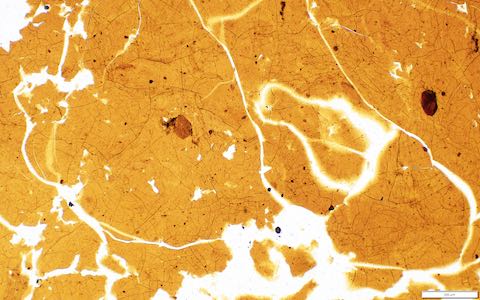
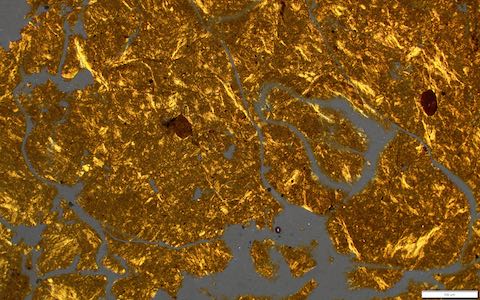
Tuam clay. This is a potential clay source of tpr179a. No inclusions except for oxides.
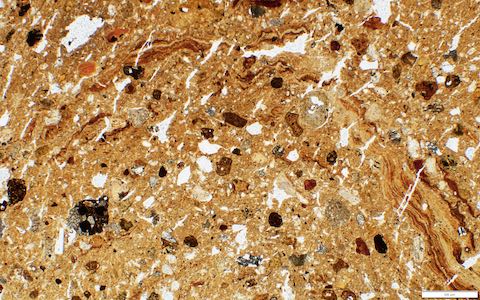
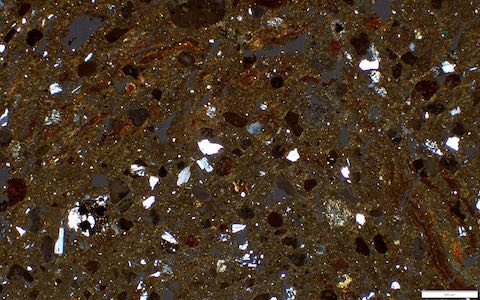
Lapita style. The pale brown clay contains remnant shelly fragments, up to 0.3 mm in length. Volcanic rock fragments contain mainly plagioclase crystals and tiny feldspar grains up to 0.5 mm in length. Subrounded ferruginized clasts and angular feldspar grains are about 0.2 mm in length. Contains wavy layers of red brown clay.
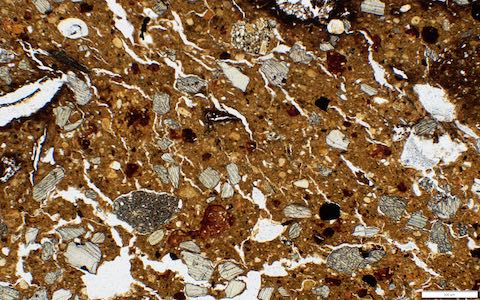
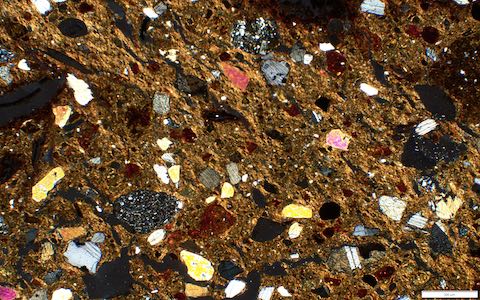
Sio style sherd. "CAUTION: Section less than 30microns. Pyroxene crystals are angular and about 0.4 mm in diameter. They are unaltered and show prominent cleavage traces. Volcanic rock fragments essentially contain ferruginized glass, feldspar crystals and small plagioclase laths. Opaques, rounded red brown clay clasts, ferruginized fossil fragments and feldspar grains are minor components. The clay is dark brown.
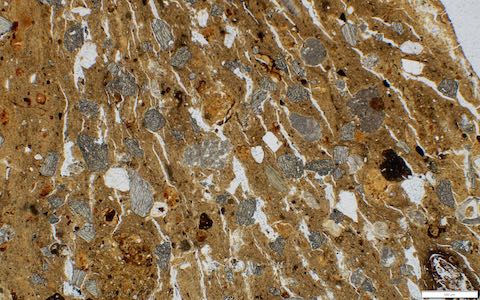
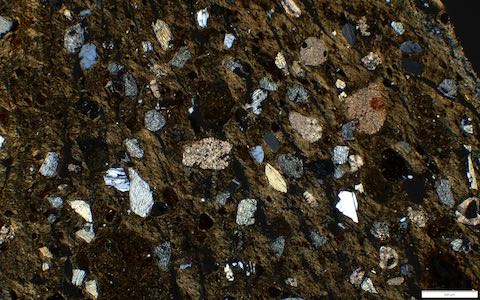
Lapita style. CAUTION: Section less than 30microns. This sample contains colourless to pale green pyroxene crystals (10%) up to 0.4 mm in length. Angular feldspar grains are up to 0.3 mm in length and there is less than 5%. There are rare grains of volcanic rock fragments up to 0.4 mm across, elongate to rounded ferruginized clasts of clay up to 2 mm in length, and carbonate shell fragments, about 0.5 mm across.
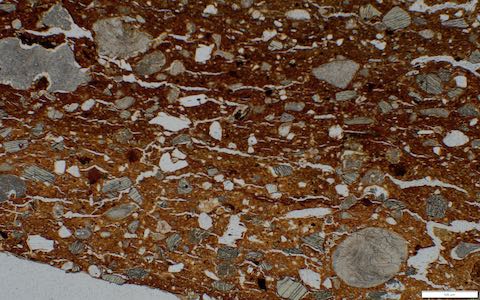
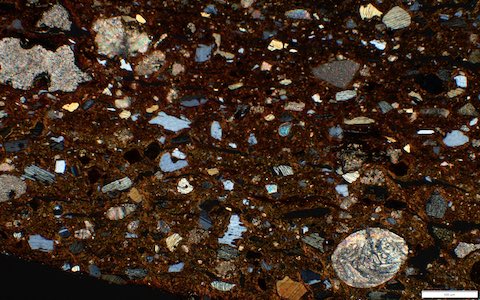
Lapita sherd. CAUTION: Section less than 30microns. This sample is similar to 8/1 but contains more and larger shelly fragments and fewer and smaller pyroxene grains. Volcanic rock fragments are up to 0.8 mm in length and consist of small feldspar crystals and opaque particles set in a glassy groundmass.
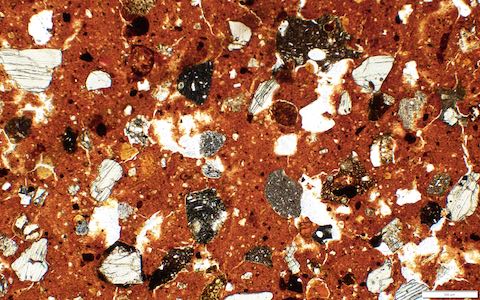
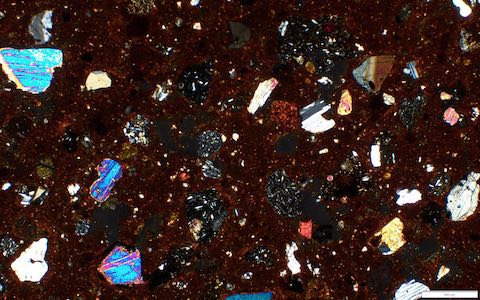
Lapita sherd. CAUTION: Section less than 30microns. This sample has reddish brown clay containing pyroxene crystals up to 0.5 mm in length. Feldspar grains up to 0.5mm in length, show growth rings. Volcanic rock fragments are composed mainly of glass with minor feldspar crystals. Opaque grains are up to 0.2 mm across.
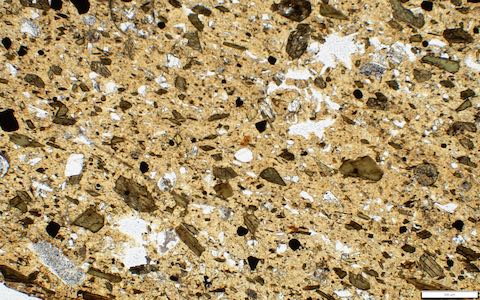
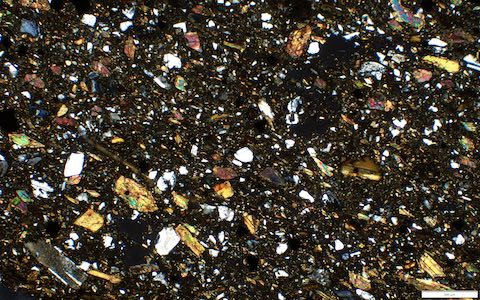
Type Y style. Contains high levels of amphibole. The amphibole is green to brown and the blades and prisms range from 0.1 to 0.5 mm in length. The angular amphibole grains make up about 10% of the sherd. Plagioclase (<10%) occurs as large rectangular crystals which show growth rings. Some of the grains are partly sericitized. Other plagioclase crystals are small and angular. Magnetite (<1%) .
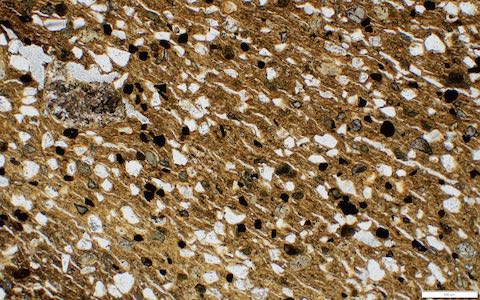
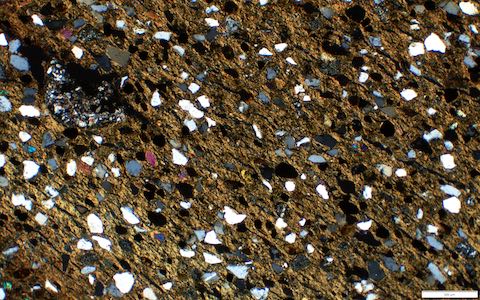
Type Y style. This sherd contains quartz, feldspar, amphibole, pyroxene, magnetite, spinel, rock fragments, ferruginized clay clasts and relict shells. The quartz and feldspar grains (10%) are generally angular and 0.2 mm in length. Amphibole blades (<5%) are green to brown, and less than 0.2 mm across. Magnetite (5%) occurs as rounded grains. Pale green pyroxene crystals are rare. Spinel is an accessory mineral occurring as angular grains up to 0.2 mm.
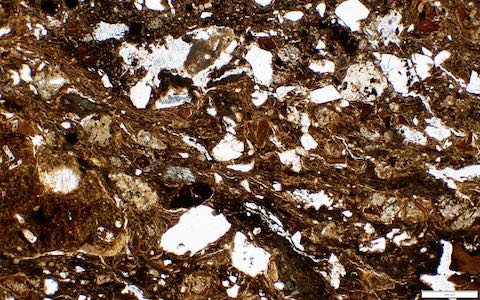
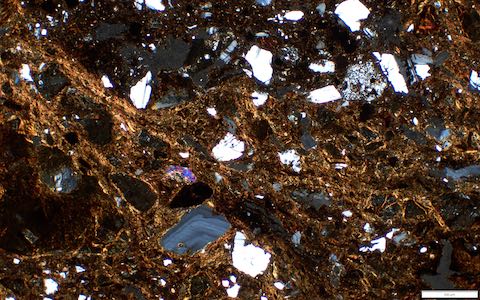
Sio style. CAUTION: Section less than 30microns. in diameter. Volcanic rock fragments (<10%) are up to 0.5 rnn across and contain feldspar microlites, opaques and altered glass. Angular pyroxene crystals are accessory. Elongate and rounded pellets are devoid of inclusions. The sherd also contains some large (up to 2 nm in length) ferruginized fragments which also contain opaques and plagioclase. These may be broken pot fragments. Opaque minerals.
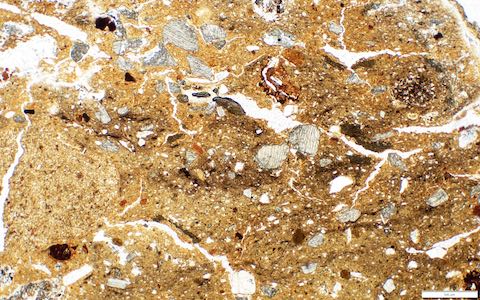
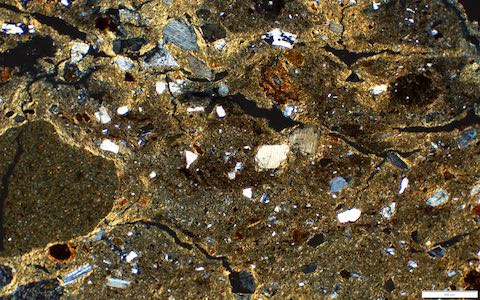
Sio style sherd. CAUTION: Section less than 30microns. The pyroxene, Less than 5% forms elongate angular grains up to 0.3 mm in length. Angular feldspar grains (<5%) are widely scattered through the clay. There are a small number of dark brown to black ferruginized clasts. Angular rock fragments are composed of plagioclase laths and altered glass. There are some large fragments, up to 2 mm in length, which are composed of fine particles of clay, feldspar and brown iron oxide.
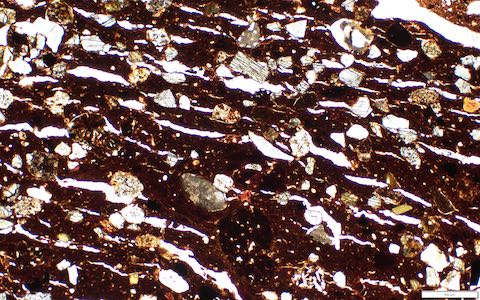
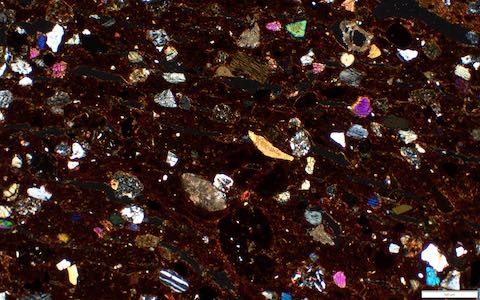
Madang style sherd. "CAUTION: Section less than 30microns. Pyroxene grains (<5%) are sub angular to sub rounded and up to 0.3 mm in length. Plagioclase grains, (<5%) are less than 0.2 mm in length. Sub rounded shelly fragments make up less than 2%. There is accessory volcanic rock fragments, red clay clasts and iron oxides.
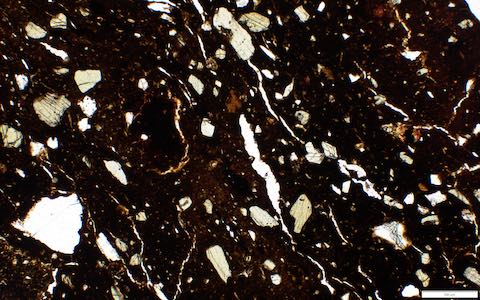
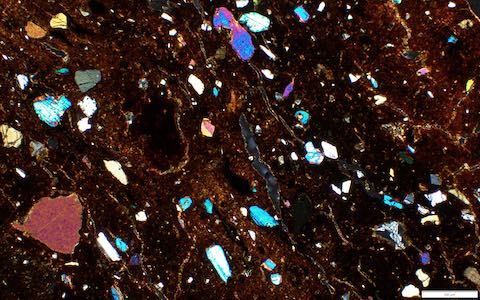
Sio style sherd. CAUTION: Section less than 30microns. Pyroxene crystals are elongate, up to 0.4 mm in length and are the dominant temper. Small amounts of plagioclase ranging in size from 0.1 to 0.3 mm in length are also present. The clay is dark brown.
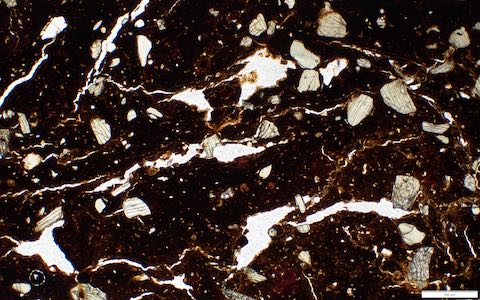
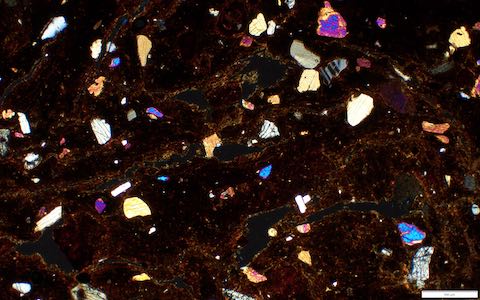
Sio style sherd. CAUTION: Section less than 30microns. Pyroxene crystals are generally 0.3 mm in length. There is also minor amounts of altered volcanic rock fragments up to 1 mm across. Ferruginized clay clasts up to 0.5 mm across and small angular feldspar grains. The clay is dark red brown.
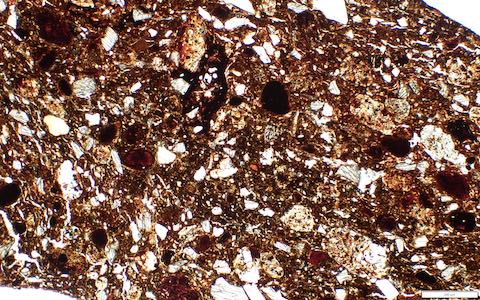
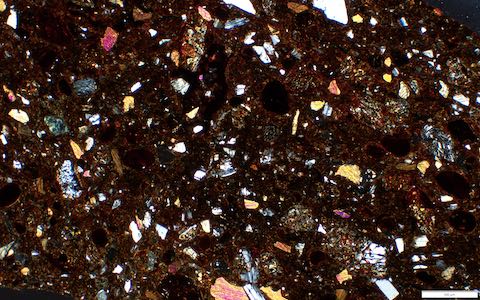
Sio style sherd. "CAUTION: Section less than 30microns. Pyroxene occurs as elongate blades and short stubby crystals ranging from 0,1 to 0.4 mm in length. Rectangular and angular plagioclase crystals, show weak seritization. Angular rock fragments generally contain plagioclase crystals, altered pyroxene crystals and opaques, all of which are less than 0.1 mm in length. Rounded red clay pellets are up to 0.3 nm in diameter. The clay is dark red brown.
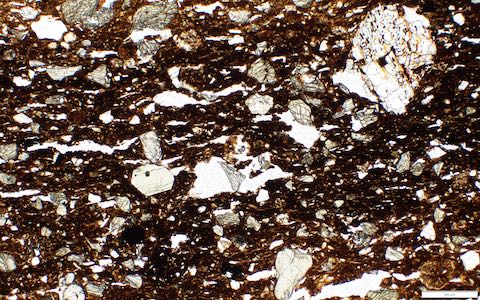
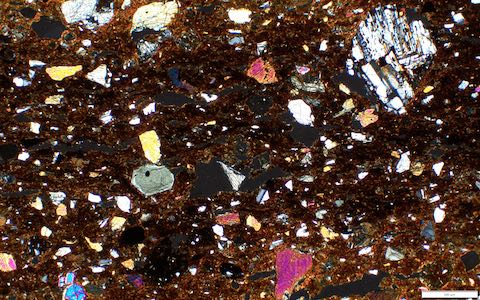
Sio style sherd. CAUTION: Section less than 30microns. Pyroxene grains occur as elongate blades, up to 0.5 mm in length, angular stubby grains 0.2 mm in length, and as well developed crystals up to 0.3 mm across. Small angular plagioclase grains. Rock fragments composed of plagioclase crystals up to 0.3 nm in length are rare. Volcanic rock fragments are generally less than 0.2 mm in length and composed of opaques, clay and relict feldspar.
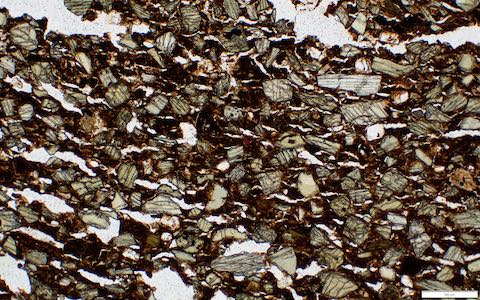
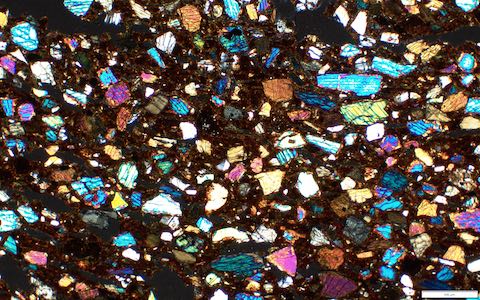
Sio style sherd. CAUTION: Section less than 30microns. Pyroxene crystals are abundant and make up most of the sample. They are closely packed, angular and about 0.3 mm in length. Plagioclase crystals are a minority. Opaque minerals are rare The clay is red brown.
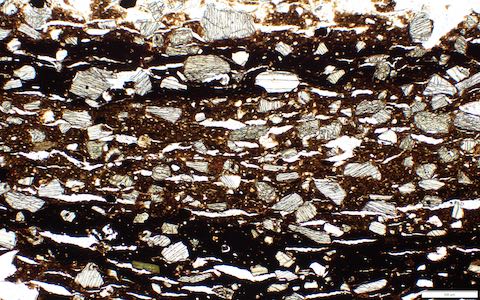
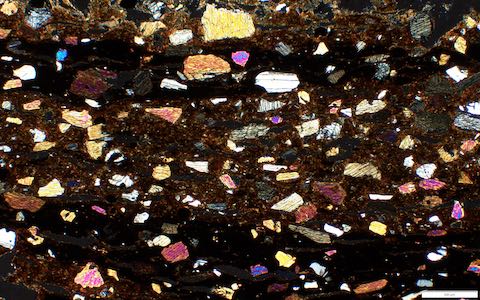
Sio style sherd. CAUTION: Section less than 30microns. Contains abundant pyroxene and smaller amounts of volcanic rock fragments, plagioclase crystals and clay.
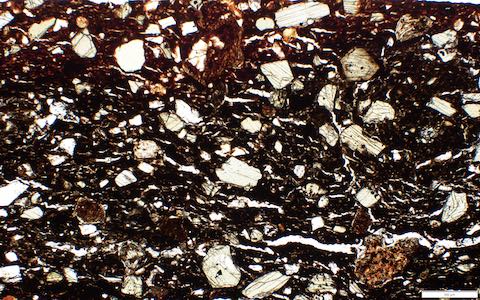
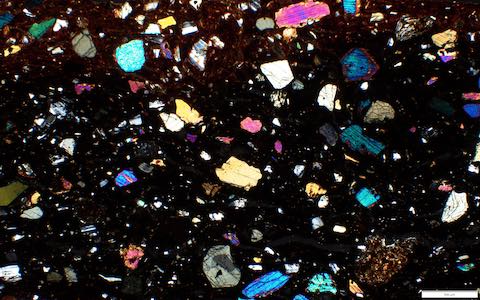
Sio style sherd. CAUTION: Section less than 30microns. Pyroxene crystals range from 0.1 to 0.5 mm in length. Plagioclase crystals are angular and less than 0.2 mm in length. Volcanic rock fragments are less than 0.5 mm in length and contain relict plagioclase, altered glass and mafic minerals and fine opaques. The clay is dark brown.
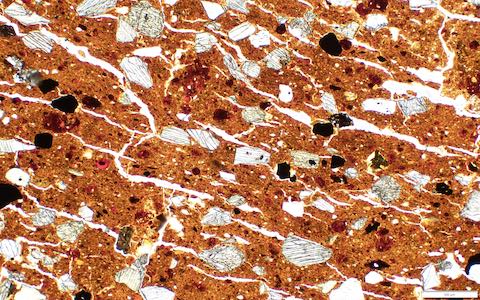
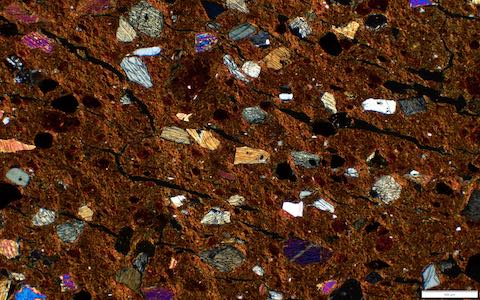
Madang style sherd. CAUTION: Section less than 30microns. Pyroxene crystals are about 0.3 mm in length. Plagioclase crystals are about 0.1 mm in length. Volcanic rock fragments are hypohyaline in texture and consist of plagioclase laths and altered glass. The are some yellow brown rounded clay clasts, red clay clasts, subrounded iron oxides are about 0.2 mm in length. The clay is brown and contains fine quartz and ferruginized opaques.
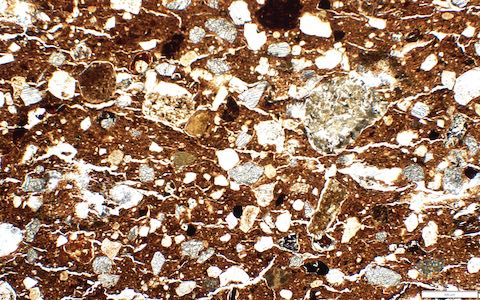
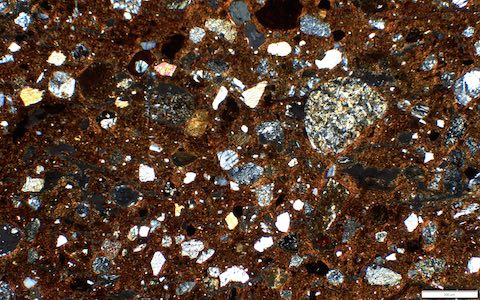
Madang style sherd. CAUTION: Section less than 30microns. Does not contain carbonate shell fragments and there are some large porphyritic dacite rock fragments. Volcanic rock fragments are also more abundant.
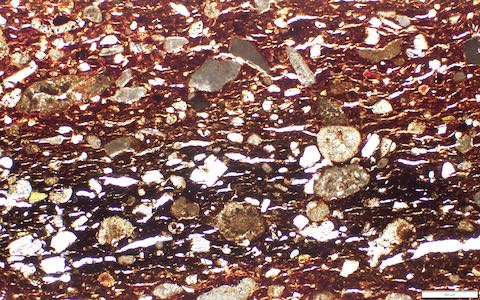
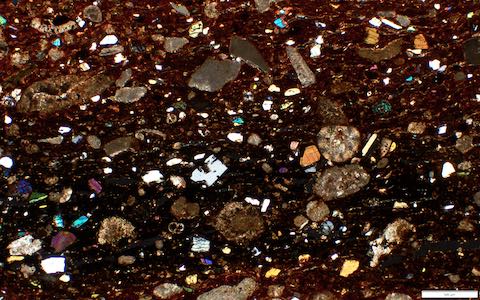
Sio style sherd. CAUTION: Section less than 30microns. Shelly fragments are generally subrounded and less than 1 mm in diameter. Pyroxene grains are up to 0.3 mm in length. Plagioclase occurs as angular grains less than 0.2 mm in length. There is also accessory iron oxides and red clay pellets. The clay is red brown
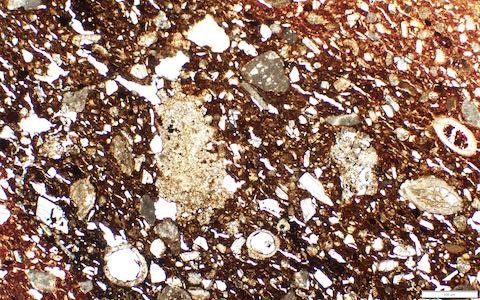
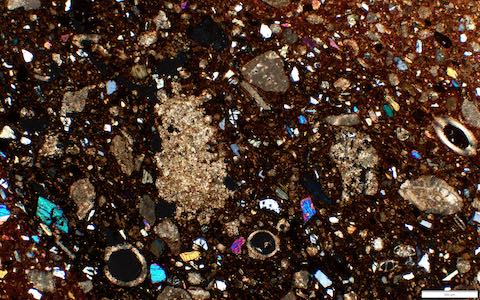
Sio style sherd. CAUTION: Section less than 30microns. Shelly fragments, are up to 1 mm in length. Pyroxene crystals, plagioclase crystals range in size from <0.1 up to 0.2 mm in length. There is also accessory iron oxide grains and the clay is red brown.
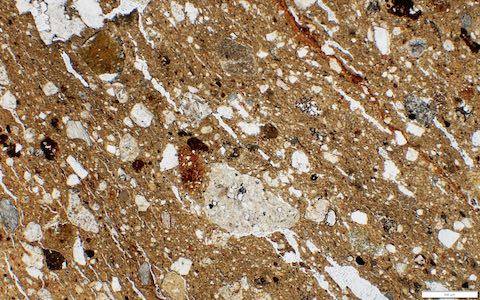
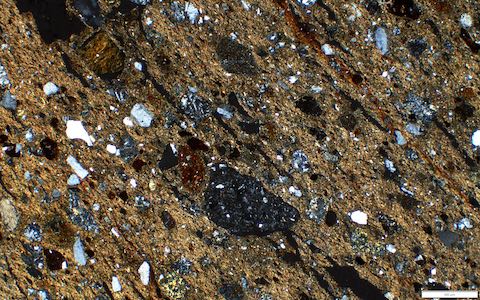
Madang style sherd. CAUTION: Section less than 30microns. Angular and subrounded feldspar grains, are generally 0.2 mm in diameter. Rock fragments are both volcanic and quartzitic. Volcanic rock fragments, up to 0.3 mm in length, generally contain plagioclase, opaques and minor pyroxene. A few grains consist of abundant iron oxide, altered glass and minor plagioclase. The quartz rock fragments are subrounded, about 0.2 mm across and are composed of small quartz mosaics.
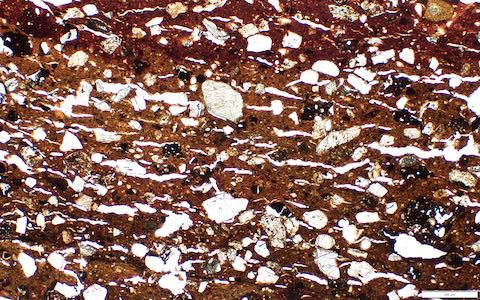
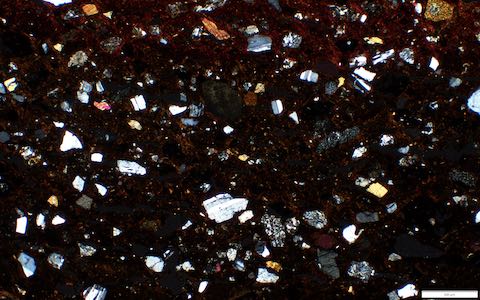
Madang style sherd. CAUTION: Section less than 30microns. Angular to subrounded plagioclase crystals are the main mineral component. Pyroxene grains up to 0.3 m in length. Altered rock fragments generally contain plagioclase microlites and glass. Ferruginized clay clasts up to 1 mm in length are rare. Red iron oxide pellets and black magnetite present.
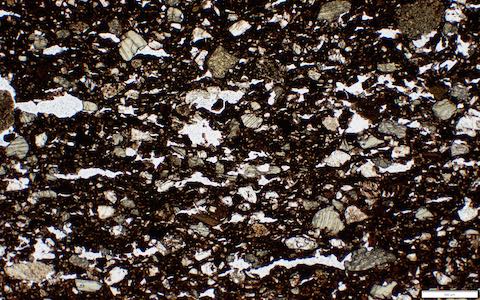
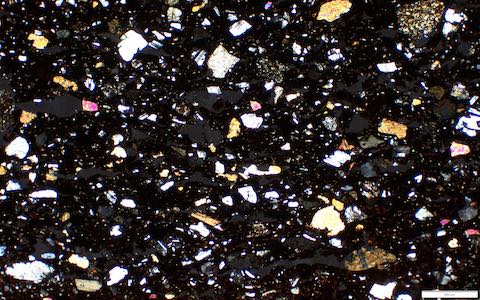
Sio style. CAUTION: Section less than 30microns. Pyroxene grains (5%) are generally less than 0.4 m in length. Plagioclase laths (5%) are less than 0.2 mm in length. There are some large volcanic rock fragments made up of abundant plagioclase laths, minor pyroxene and fine grained opaques in a hypocrystallne texture. Accessory iron oxide and red ferruginized clay pellets are also present. The clay is dark brown.
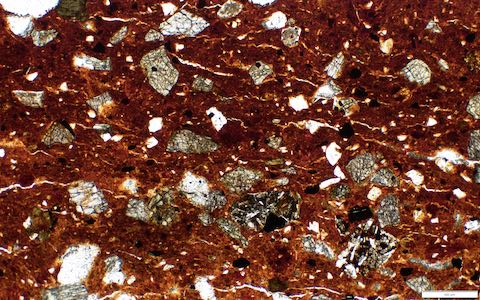
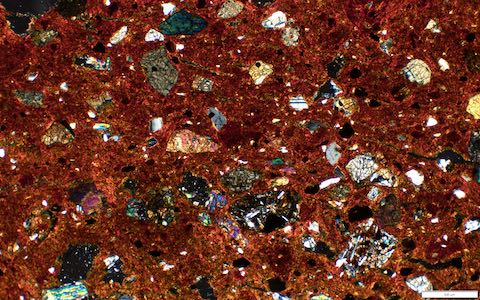
Sio style. CAUTION: Section less than 30microns. Pyroxene crystals (<5%) are pale green to brown widely scattered and about 0.3 mm across. Volcanic rock fragments (<5%) are angular and up to 0.5 mm across. They contain plagioclase laths, opaques and altered glass. Red brown clay clasts up to 1 mm across contain small crystals of plagioclase and iron oxide. Rounded iron oxide grains make tp less than 2% of the sherd. The clay is red brown.
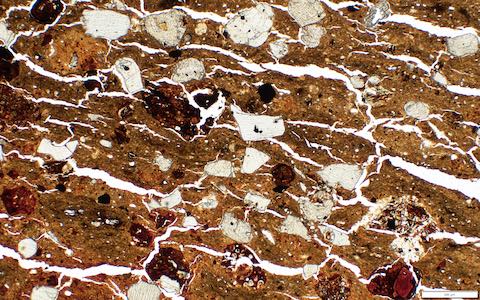
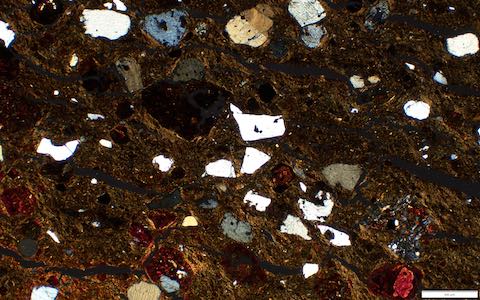
Sio style. CAUTION: Section less than 30microns. Pyroxene crystals are generally 0.5 mm in length and make up about 10% of the sherd. Altered volcanic rock fragments 5% are up to 0.5 mm in length and contain plagioclase laths, altered glass and mafic minerals. There are some red ferruginized clasts, the brown clay also contains small amounts of fine quartz and feldspar.
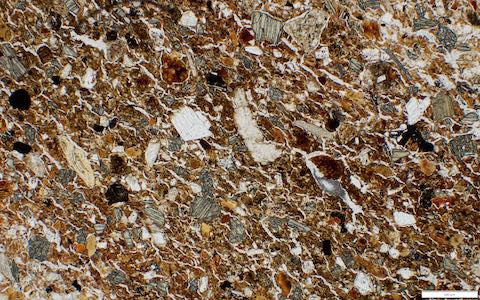
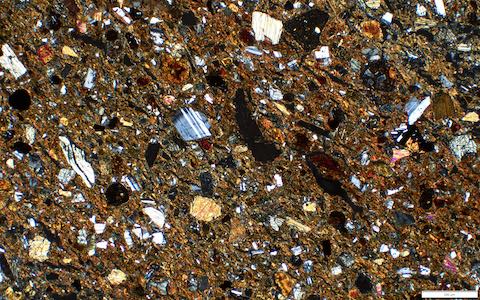
Sio style. CAUTION: Section less than 30microns. Pyroxene crystals (<5%) are generally 0.2 mm in length and there are some large ones up to 0.5 mm in length. There is some altered volcanic rock fragments up to 0.5 mm in length, contain thin plagioclase crystals and yellow brown altered glass. Opaque minerals (5%) are less than 0.2 mm in length. There are some red ferruginized clasts up to 0.4 m in length and brown ferruginized clay clasts up to 0.1 mm in diameter. The clay is a pale brown.
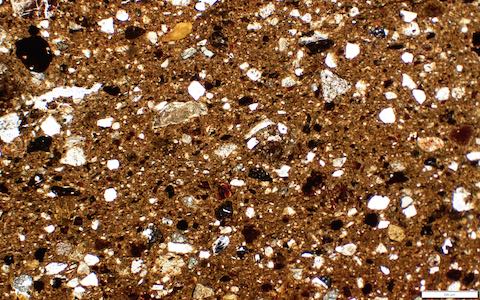
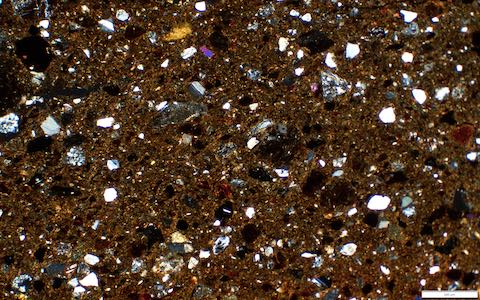
Madang style. CAUTION: Section less than 30microns. Angular quartz and feldspar grains (about 10%), Minor pyroxene grains are all <0.2 mm in length. There are some minor volcanic rock fragments which contain plagioclase, iron oxides and altered glass. Opaque minerals range in size from 0.1 to 0.5 mm in length, and there is less than 5% of those. The clay is red brown.